The internet creates new slang terms almost every day.
From texting abbreviations to viral TikTok phrases, online language evolves faster than ever. One acronym that has recently gained attention is SYBAU.
If you’ve seen someone use it in a text message, social media comment, gaming chat, or online discussion, you may have wondered: What is the SYBAU meaning in text?
Understanding modern internet slang is important because many abbreviations carry strong emotions, hidden meanings, or cultural context.
Using them incorrectly can lead to misunderstandings, awkward conversations, or even conflicts online.
In this comprehensive guide, we’ll explore the SYBAU meaning in text, where it originated, how people use it, examples, alternatives, social media trends, and everything else you need to know about this increasingly popular internet acronym.
What Does SYBAU Mean in Text? 🤔
SYBAU stands for:
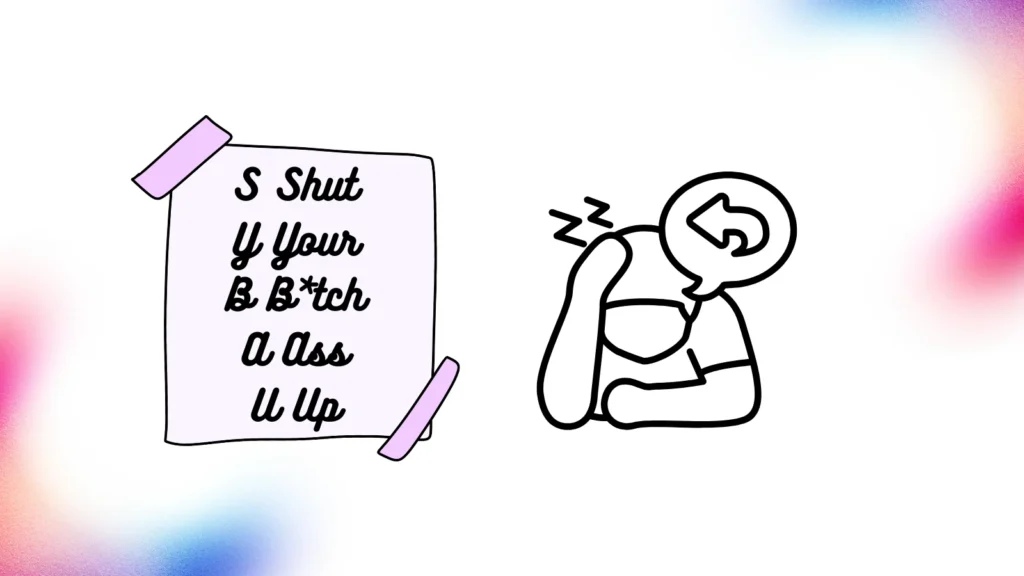
“Shut Your B*tch Ass Up”
It is a slang abbreviation used online to tell someone to stop talking, stop complaining, or stop saying something that the speaker finds annoying, ridiculous, or unnecessary.
The phrase is generally considered:
- Informal
- Aggressive
- Offensive
- Internet slang
- Common among younger users
Depending on context, SYBAU may be used:
✅ As a joke among friends
✅ During online gaming
✅ In social media arguments
✅ In meme culture
❌ In professional conversations
❌ In formal communication
❌ In workplace settings
Because the phrase contains profanity, users often shorten it to SYBAU instead of typing the full expression.
The Literal Meaning of SYBAU 📝
Let’s break down the acronym:
| Letter | Word |
|---|---|
| S | Shut |
| Y | Your |
| B | B*tch |
| A | Ass |
| U | Up |
When expanded, the phrase becomes:
“Shut Your B*tch Ass Up.”
The statement is essentially a stronger and more insulting version of simply saying:
- “Be quiet.”
- “Stop talking.”
- “Enough already.”
- “Nobody asked.”
This stronger wording is what gives the acronym its emotional impact online.
Where Did SYBAU Originate? 🌎
Like many internet slang terms, SYBAU didn’t emerge from a single source.
The phrase evolved from:
- Urban slang
- Hip-hop culture
- Online gaming communities
- Social media platforms
- Meme culture
Over time, internet users began shortening longer insults into abbreviations.
Examples include:
- STFU = Shut The F*** Up
- GTFO = Get The F*** Out
- IDK = I Don’t Know
- TBH = To Be Honest
SYBAU followed the same trend by transforming a longer phrase into a quick acronym that users could type rapidly during conversations.
The abbreviation became especially popular on:
- TikTok 🎵
- Twitter/X 🐦
- Discord 🎮
- Instagram 📸
- Twitch 🎥
- YouTube comments ▶️
Why Is SYBAU Popular on Social Media? 📈
Social media thrives on short, fast communication.
Users often prefer abbreviations because they:
- Save time
- Look trendy
- Fit character limits
- Create insider language
- Spread quickly through memes
SYBAU gained popularity because it combines:
🔥 Humor
🔥 Attitude
🔥 Internet culture
🔥 Shock value
🔥 Simplicity
Many users type it without realizing some readers may not know what it means.
This curiosity helps the acronym spread even further.
How Is SYBAU Used in Text Messages? 📲
In texting, SYBAU usually appears when someone wants another person to stop talking or stop making a particular point.
Example 1
Friend A:
“I think pineapple belongs on pizza.”
Friend B:
“SYBAU 😂”
In this case, it is meant jokingly.
Example 2
Person A:
“I’ve told you that story ten times.”
Person B:
“SYBAU bro.”
Here, it expresses annoyance.
Example 3
Person A:
“Let me explain again.”
Person B:
“SYBAU.”
This version feels much more hostile.
Context determines whether the message is playful or offensive.
SYBAU Meaning on TikTok 🎵
TikTok has become one of the biggest drivers of internet slang.
On TikTok, SYBAU often appears in:
- Video captions
- Comments
- Reaction videos
- Meme posts
- Livestream chats
Users frequently employ it as a humorous response when someone says something outrageous or embarrassing.
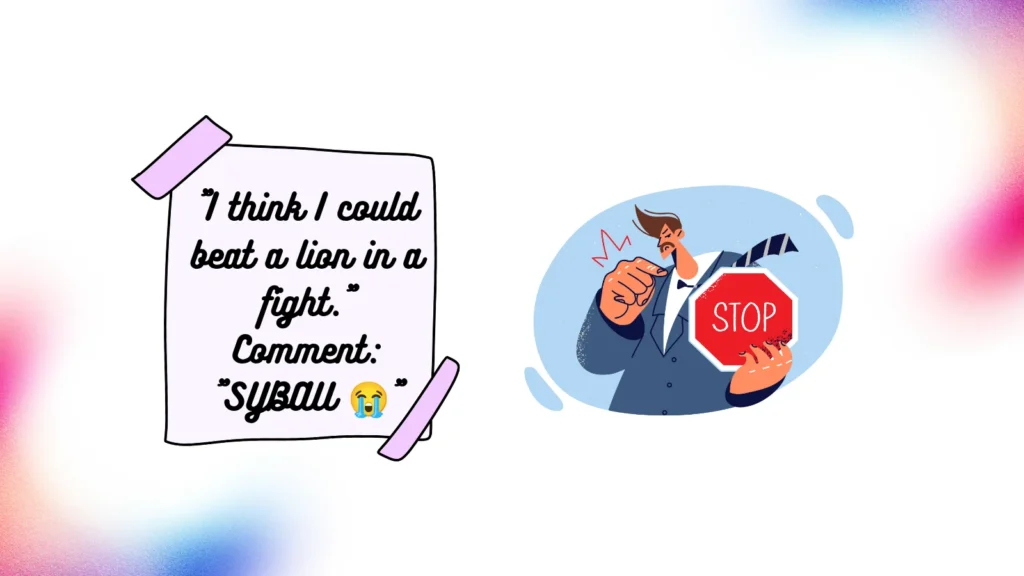
For example:
Video Creator:
“I think I could beat a lion in a fight.”
Comment:
“SYBAU 😭”
The commenter isn’t literally demanding silence. Instead, they’re jokingly saying:
“That statement is ridiculous.”
This humorous usage helped the acronym go viral.
SYBAU in Gaming Culture 🎮
Gaming communities are known for creating and spreading internet slang.
SYBAU frequently appears in:
- Multiplayer games
- Discord servers
- Voice chats
- Twitch streams
- Competitive gaming forums
Players may use it when:
- Trash talking opponents
- Reacting to bad advice
- Responding to complaints
- Making jokes among teammates
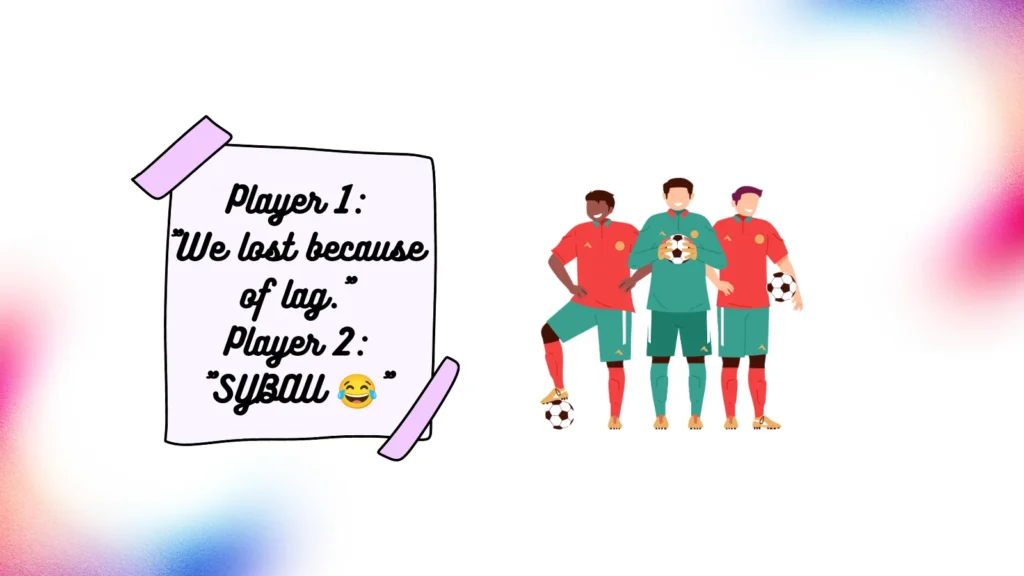
Example:
Player 1:
“We lost because of lag.”
Player 2:
“SYBAU 😂”
Again, tone matters significantly.
Friends may view it as harmless banter, while strangers may find it offensive.
Is SYBAU Offensive? ⚠️
Yes.
SYBAU is generally considered offensive because it contains:
- Profanity
- Insulting language
- Aggressive wording
The phrase can easily hurt someone’s feelings if used seriously.
Not Appropriate For:
❌ Workplace emails
❌ School assignments
❌ Professional meetings
❌ Customer service interactions
❌ Formal communication
More Acceptable In:
✅ Meme communities
✅ Close friendships
✅ Casual gaming groups
✅ Informal online conversations
Even then, users should consider their audience before using it.
Different Meanings Based on Context 🎭
One interesting aspect of internet slang is that context changes meaning.
SYBAU can express:
1. Humor 😂
Used among friends joking around.
2. Disbelief 😲
Reacting to an unbelievable statement.
3. Frustration 😤
Showing annoyance.
4. Mockery 😏
Making fun of someone.
5. Anger 😡
Directly insulting another person.
The exact interpretation depends on:
- Relationship between users
- Tone
- Emojis
- Conversation history
- Social platform
Examples of SYBAU in Conversations 💬
Here are several realistic examples.
Funny Example
Friend:
“I can finish a whole pizza in 3 minutes.”
Response:
“SYBAU 😂”
Gaming Example
Player:
“I carried the entire team.”
Teammate:
“SYBAU bro.”
TikTok Example
Commenter:
“I’d survive a zombie apocalypse.”
Reply:
“SYBAU 😭”
Argument Example
Person A:
“You never listen.”
Person B:
“SYBAU.”
This example feels significantly more hostile.
Alternative Slang Terms Similar to SYBAU 🔥
Several internet expressions have similar meanings.
| Slang | Meaning |
|---|---|
| STFU | Shut The F*** Up |
| GTFO | Get The F*** Out |
| IDC | I Don’t Care |
| LMAO | Laughing My Ass Off |
| SMH | Shaking My Head |
| BRUH | Expression of disbelief |
| WOMP WOMP | Mocking disappointment |
| NAH BRO | Dismissive response |
Each phrase carries different levels of intensity.
SYBAU tends to be stronger than many of these alternatives.
How Should You Respond to SYBAU? 🤝
Your response depends on the context.
If It Was a Joke
You can respond playfully:
- “😂 Fair enough.”
- “You know I’m right.”
- “Let me cook.”
If It Was Meant Seriously
Consider:
- Staying calm
- Ignoring the comment
- Ending the conversation
- Responding respectfully
Avoid escalating conflicts online whenever possible.
Why Internet Slang Evolves So Quickly 🚀
Terms like SYBAU spread rapidly because social media rewards:
- Short messages
- Viral trends
- Meme culture
- Relatable humor
- Community identity
Acronyms allow users to communicate emotions quickly while feeling connected to online culture.
Every year, new abbreviations emerge while older ones fade away.
This constant evolution keeps internet language dynamic and exciting.
Common Misunderstandings About SYBAU ❌
Many people incorrectly assume:
Myth #1
SYBAU is always a joke.
Reality: It can be serious or offensive.
Myth #2
Everyone understands it.
Reality: Many users have never encountered the acronym.
Myth #3
It’s appropriate everywhere.
Reality: Professional settings should avoid it.
Myth #4
It’s harmless slang.
Reality: Some people find it rude or disrespectful.
Understanding context prevents communication mistakes.
Should You Use SYBAU? 🤷
Before using SYBAU, ask yourself:
Consider Using It If:
✅ You’re joking with close friends
✅ Everyone understands the context
✅ The environment is informal
Avoid Using It If:
❌ You’re speaking professionally
❌ You don’t know the audience
❌ The conversation is serious
❌ You want to avoid offending someone
The safest approach is understanding the term rather than using it frequently.
The Future of SYBAU and Internet Slang 🔮
Like many viral expressions, SYBAU may continue growing in popularity or eventually fade as newer slang emerges.
Internet language constantly changes because:
- New social platforms appear
- Memes evolve
- Younger generations create fresh expressions
- Online communities invent new abbreviations
Even if SYBAU becomes less common in the future, it remains an interesting example of how digital communication shapes modern language.
FAQs
What does SYBAU mean in text?
SYBAU stands for “Shut Your B*tch Ass Up.” It is an internet slang abbreviation used to tell someone to stop talking, often in a humorous or insulting way.
Is SYBAU offensive?
Yes. The phrase contains profanity and can be considered rude or disrespectful depending on the situation.
Where is SYBAU commonly used?
SYBAU is commonly seen on TikTok, Discord, Instagram, X (Twitter), YouTube comments, and gaming platforms.
Is SYBAU a joke or an insult?
It can be either. Among friends it may be used humorously, while in arguments it often functions as an insult.
Can I use SYBAU in professional communication?
No. It is inappropriate for workplaces, schools, business emails, and formal communication.
Why do people use SYBAU instead of typing the full phrase?
The abbreviation is faster to type, easier to share, and fits internet culture where acronyms are widely used.
See More
ASL Meaning in Text: What It Means and How to Use It 2026
MYF Meaning in Text What It Means and How to Use It 2026
EYP Meaning in Text: Definition, Uses & Examples 2026
Conclusion 🎯
Understanding the SYBAU meaning in text helps you navigate modern online conversations with confidence.
The acronym stands for “Shut Your B*tch Ass Up” and is commonly used across social media, gaming platforms, text messages, and meme culture.
While it is often used jokingly among friends, it can also be offensive and aggressive depending on the context.
The key takeaway is that context matters.
A playful SYBAU in a TikTok comment may simply be a joke, while the same phrase in an argument can be interpreted as a direct insult.
By understanding its meaning, origin, examples, and appropriate usage, you can better interpret online conversations and avoid potential misunderstandings in today’s fast changing digital world.