Have you ever received a text message that simply said “HY” and wondered what it meant?
You’re not alone.
Modern digital communication moves incredibly fast.
People constantly shorten words, use abbreviations, and create new slang terms to communicate quickly.
From LOL and BRB to newer expressions found on social media, understanding internet language has become an important part of everyday communication.
One abbreviation that frequently appears in text messages, online chats, gaming communities, and social media platforms is HY.
While it looks simple, its meaning can vary depending on the conversation and context.
Understanding the HY meaning in text can help you avoid confusion, respond appropriately, and stay up to date with current texting culture.
In this comprehensive guide, we’ll explore everything you need to know about HY, including its meaning, origin, examples, variations, proper usage, and common misunderstandings.
What Does HY Mean in Text? 📱
The most common meaning of HY in text messages is:
“Hey”
Many people use HY as a shortened version of “Hey” when starting a conversation.
Example:
Friend: HY
You: Hey! What’s up?
In this context, HY functions exactly like a greeting. It’s a quick way to say hello without typing the full word.
Because texting is often fast-paced, users prefer shorter forms of communication. HY helps save time while maintaining a casual and friendly tone.
Quick Definition Table
| Abbreviation | Meaning | Usage |
|---|---|---|
| HY | Hey | Greeting |
| HY | Hi You | Friendly greeting |
| HY | Hell Yeah | Excitement or agreement |
| HY | How You? | Informal question |
The intended meaning usually depends on the conversation.
The Most Common Meaning of HY: “Hey” 👋
When people search for hy meaning in text, they’re usually looking for the abbreviation of “Hey.”
This usage is especially common among:
- Teenagers
- Young adults
- Social media users
- Online gamers
- Messaging app users
Why People Use HY Instead of Hey
Several factors contribute to the popularity of HY:
✅ Faster typing
✅ Informal communication
✅ Mobile-friendly texting
✅ Trendy internet slang
✅ Casual conversation starter
For example:
Person A: HY 😊
Person B: Hey! How are you?
In this case, HY is simply a friendly greeting.
Other Possible Meanings of HY 🔍
Although “Hey” is the most common interpretation, HY can occasionally have other meanings.
1. Hi You
Some people use HY as shorthand for:
“Hi You”
This version feels slightly more personal and affectionate.
Example:
HY ❤️
Translation:
“Hi you!”
This usage is common among close friends, romantic partners, and family members.
2. Hell Yeah
In certain online communities, HY may stand for:
“Hell Yeah”
This expression shows excitement, enthusiasm, or strong agreement.
Example:
Friend: Want pizza tonight?
You: HY! 🍕
Meaning:
“Hell Yeah!”
3. How You?
In some casual conversations, HY may represent:
“How You?”
Example:
HY today?
Meaning:
“How are you today?”
Although this usage is less common, it still appears occasionally in text conversations.
The Origin of HY in Online Communication 🌐
Internet abbreviations evolved alongside technology.
During the early days of:
- SMS texting
- AOL Instant Messenger
- Yahoo Messenger
- Online forums
- Chat rooms
Users faced character limits and slower typing speeds.
As a result, shortened words became popular.
Examples include:
- LOL = Laugh Out Loud
- BRB = Be Right Back
- OMG = Oh My God
- TY = Thank You
- HY = Hey
Over time, these abbreviations became embedded in digital culture.
Today, platforms such as:
- TikTok
- Snapchat
- Discord
- Facebook Messenger
continue to encourage brief and efficient communication.
HY Meaning on Social Media 📲

The meaning of HY remains largely the same across social media platforms.
People often send HY through:
- Direct messages
- Story replies
- Comments
Example:
HY, loved your post!
Meaning:
“Hey, loved your post!”
Snapchat
Snapchat users frequently use HY to begin conversations.
Example:
HY 👀
Meaning:
“Hey”
The emoji often adds curiosity or interest.
TikTok
TikTok comments commonly contain short slang phrases.
Example:
HY bestie 💕
Translation:
“Hey bestie”
Facebook Messenger
On Messenger, HY serves as a casual greeting before starting a conversation.
Example:
HY, got a minute?
Meaning:
“Hey, got a minute?”
HY Meaning in Dating and Relationships ❤️
Context becomes especially important when HY appears in dating conversations.
When someone sends:
HY 😊
They’re often initiating contact in a friendly way.
Depending on the relationship, it can indicate:
- Interest
- Affection
- Curiosity
- Casual friendliness
Example Conversation
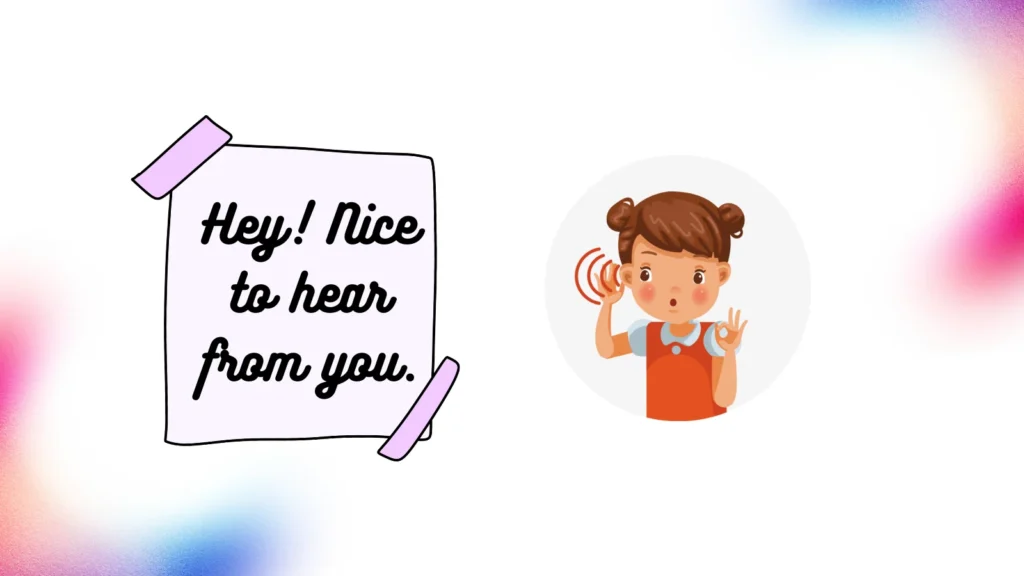
Person A: HY ❤️
Person B: Hey! Nice to hear from you.
Here, HY functions as a warm greeting and conversation starter.
Many people intentionally keep opening messages simple because it feels less intimidating.
Examples of HY in Real Conversations 💬
Let’s look at practical examples.
Example 1: Friendly Greeting
Sarah: HY
Mike: Hey! How’s your day going?
Example 2: Excitement
Alex: We won the game!
Jordan: HY! That’s awesome!
Meaning:
“Hell Yeah!”
Example 3: Social Media Message
User: HY, loved your latest video!
Meaning:
“Hey, loved your latest video!”
Example 4: Romantic Chat
Emma: HY 😊
Jake: Hey beautiful!
The abbreviation acts as a casual opening.
How to Respond When Someone Sends HY 🤔
If someone texts you HY, your response depends on the context.
Casual Responses
- Hey!
- Hi!
- What’s up?
- How are you?
- Hello 😊
Friendly Responses
- Hey there!
- Nice to hear from you!
- How’s everything going?
Flirty Responses
- Hey you 😉
- Hi stranger ❤️
- I’ve been waiting to hear from you!
In most situations, simply responding with “Hey” works perfectly.
HY vs Hey vs Hi: What’s the Difference? 🔄
Although HY is often used as a substitute for “Hey,” there are subtle differences between these greetings.
| Greeting | Tone | Formality | Common Usage |
|---|---|---|---|
| HY | Very casual | Informal | Texts, chats, social media |
| Hey | Friendly | Informal | Everyday conversations |
| Hi | Neutral | Semi-formal | Personal and professional settings |
| Hello | Polite | More formal | Professional communication |
HY
HY is usually reserved for quick digital conversations. It feels modern, short, and relaxed.
Hey
“Hey” is slightly more complete and can be used both online and offline.
Hi
“Hi” sounds a bit more polite and is often used when speaking with acquaintances, coworkers, or new contacts.
Example
HY → Very casual
Hey → Friendly
Hi → Polite
Hello → Professional
Understanding these differences helps you choose the right greeting for the situation.
Is HY Considered Good Texting Etiquette? 📱
Generally, yes.
Using HY is perfectly acceptable when communicating with:
- Friends
- Family members
- Classmates
- Online communities
- Social media followers
However, there are situations where HY may not be appropriate.
Appropriate Situations
✅ Texting friends
✅ Casual conversations
✅ Social media messages
✅ Gaming chats
✅ Group chats
Less Appropriate Situations
❌ Job applications
❌ Business emails
❌ Professional networking
❌ Formal customer communication
Better Professional Alternatives
Instead of HY, consider:
- Hello
- Hi
- Good morning
- Good afternoon
Professional communication benefits from complete greetings.
Why Internet Slang Like HY Is So Popular 🚀
Internet slang continues to grow because people value speed and convenience.
Several factors explain the popularity of abbreviations like HY.
1. Faster Communication
Typing fewer characters saves time.
2. Mobile Device Usage
Most online communication happens on smartphones.
Short abbreviations are easier to type on small keyboards.
3. Social Media Culture
Platforms reward quick interactions.
Users often prioritize speed over perfect grammar.
4. Sense of Community
Using modern slang helps people feel connected to online culture.
5. Character Efficiency
Even though character limits are less restrictive today, users still prefer concise communication.
HY is a perfect example of this trend.
Common Texting Abbreviations Related to HY 📚
If you’re learning texting slang, HY is only the beginning.
Here are some other popular abbreviations you may encounter.
| Abbreviation | Meaning |
| LOL | Laugh Out Loud |
| BRB | Be Right Back |
| IMO | In My Opinion |
| TBH | To Be Honest |
| TTYL | Talk To You Later |
| TY | Thank You |
| IDK | I Don’t Know |
| SMH | Shaking My Head |
| FWIW | For What It’s Worth |
| OMG | Oh My God |
Knowing these abbreviations can make online conversations much easier to understand.
HY Meaning Across Different Age Groups 👥
Not everyone uses HY the same way.
Different generations often have different texting habits.
Teenagers
Teenagers frequently use abbreviations and internet slang.
HY often means:
- Hey
- Hi
- Conversation starter
Young Adults
Young adults commonly use HY in:
- Messaging apps
- Dating apps
- Social media interactions
Older Adults
Older users may be less familiar with HY and could interpret it differently.
This is why context matters.
Generational Communication Trends
| Age Group | Likelihood of Using HY |
| Teens | Very High |
| 20s–30s | High |
| 40s–50s | Moderate |
| 60+ | Lower |
As digital communication evolves, abbreviations continue to spread across all age groups.
Common Misunderstandings About HY ⚠️
Because HY has multiple interpretations, misunderstandings can occur.
Mistake #1: Assuming Only One Meaning
Many people believe HY always means “Hey.”
While that’s usually true, context can change the meaning.
Mistake #2: Using It Professionally
Sending HY in a formal business email may appear unprofessional.
Mistake #3: Ignoring Context
Consider the surrounding message.
For example:
HY! We got tickets!
Likely means:
“Hell Yeah!”
Not “Hey.”
Mistake #4: Overusing Slang
Too much internet slang can make communication unclear.
Balance casual language with clarity.
When Should You Use HY? ✅
HY works best when you want to:
- Start a casual conversation
- Greet a friend
- Send a quick message
- Reply informally
- Engage on social media
Great Examples
HY, how have you been?
HY 😊
HY bestie!
HY, saw your story!
These examples sound natural and friendly.
When You Should Avoid Using HY ❌
There are situations where using HY isn’t the best choice.
Professional Emails
Instead of:
HY, I would like to apply for the position.
Use:
Hello, I would like to apply for the position.
Customer Support Messages
Instead of:
HY, I need help.
Use:
Hello, I need assistance with my account.
Academic Communication
Teachers and professors generally expect more formal greetings.
Business Networking
Professional introductions benefit from complete words and proper formatting.
How HY Reflects Modern Communication Trends 🌎
The rise of HY demonstrates a larger shift in how people communicate online.
Modern communication is increasingly:
- Mobile-first
- Fast-paced
- Informal
- Visual
- Abbreviation-friendly
Today’s users combine:
- Text abbreviations
- Emojis
- GIFs
- Stickers
- Voice messages
For example:
HY 👋😊
This single message can communicate friendliness, warmth, and intent without requiring a full sentence.
Language constantly evolves, and HY represents one small example of that evolution.
The Future of Texting Abbreviations 🔮
Internet slang changes rapidly.
Some abbreviations disappear, while others become permanent parts of digital language.
HY remains popular because it satisfies three important needs:
- Simplicity
- Speed
- Familiarity
As communication platforms continue to evolve, users will likely create even more shorthand expressions.
However, greetings such as HY are likely to remain relevant because people will always need quick ways to start conversations.
Future Trends
- Increased emoji integration
- AI-assisted messaging
- Voice-to-text communication
- Personalized slang communities
- Platform-specific abbreviations
HY may continue evolving, but its role as a simple greeting will likely remain unchanged.
FAQs❓
1. What does HY mean in text messages?
The most common meaning of HY in text messages is “Hey.” It is often used as a quick and casual greeting.
2. Is HY the same as Hey?
In most conversations, yes. HY is simply a shortened version of “Hey” used in texting and online chats.
3. Can HY mean something other than Hey?
Yes. Depending on the context, HY may also mean:
- Hi You
- Hell Yeah
- How You?
However, “Hey” remains the most common interpretation.
4. Is HY popular on social media?
Yes. HY is frequently used on platforms such as Instagram, Snapchat, TikTok, Facebook Messenger, and Discord.
5. Is it okay to use HY in professional communication?
No. Professional emails and business communication generally require complete greetings such as “Hello” or “Hi.”
6. How should I respond to HY?
You can respond with:
- Hey!
- Hi!
- What’s up?
- How are you?
- Hello 😊
The best response depends on the tone of the conversation.
Conclusion 🎯
Understanding the HY meaning in text helps you navigate today’s fast moving digital conversations with confidence.
While HY most commonly means “Hey,” it can occasionally represent “Hi You,” “Hell Yeah,” or “How You?” depending on the context.
The abbreviation has become popular because modern communication values speed, simplicity, and convenience.
Whether you’re texting friends, replying on social media, participating in online communities, or chatting with someone special, HY serves as a quick and friendly conversation starter.
The key takeaway is simple: context matters.
In most situations, HY is nothing more than a casual greeting equivalent to saying “Hey.”